
PORTRAIT PHOTOGRAPHY PRIZE


A U T O P O R T R A I T
EXPERIMENTAL SELF-PORTRAITURE
2025 FINALISTS
Welcome to the winners and finalists gallery highlighting the Top 33 portraits from the Main entry submissions, selected by the jury panel. We would like to thank all photographers who submitted to this Call and for your continued support.
"This portrait captured my attention in the sea of photographs that I was going through with my fellow judges. It captured my attention because of the extra "art and craft" that the artist put into it when she was creating this work. In a world of digital photography, it is very easy for all of us to just sit in front of the computer and edit our photographs. Having said that, it is also very rare to see photo based artists working with their hands in cutting, glueing and arranging objects.
Besides physically making the work, I love how she was using flowers and fruits to represent her body. She didn't just create the photograph but she needed to curate what to include in the photograph like finding the right size and shape of an orange for her still life." ~ Eiffel Chong
JUDGE'S CHOICE
Andrialis
Abdul
Rahman
ARTEM HUMILEVSKYI Ukraine 1st Prize

Air Attack
During Covid we all knew that the safest place on earth was our home, but when full scale war broke out, our homes became our death traps.
I began developing a new series, Roots (2022 - 2025), after the beginning of a full-scale invasion. The common misfortune has awakened some unknown code in Ukrainians, everyone even in the most distant part of the world felt the call of their land, their identity and their freedom. This work during the war is about spirit, the power of roots and the connection between us. In the new works, I continue the journey of discovering the inner self that I began in my previous series The Giant. In Roots, I reflect on the self on another level, now as part of a community, and look for new associations of identity that is not based solely on the concept of the nation. I offer new images of ideology based on fantasy, where I reveal about subconscious spiritual symbols and show how they are subtly sewn inside us.
ELENA DROZDOVA Bulgaria 2nd Prize

Paper Face
The image is composed of hand-cut paper self-portraits, each fragment holding different shades of emotion. The wire, like a delicate thread of fate, holds them together — a fragile pause in an endless process of decay. Paper Face reflects on the layered and unstable nature of identity, suspended in a taut balance between body and soul. With time, it becomes harder to manage inner feelings and to remove the masks behind which the true self hides.
YUXING CHEN China / UK 3rd Prize

The Banqueting Room, by fireplace
This image is a digitally manipulated archival photograph of The Banqueting Room in the Brighton Pavilion. The room is one of the most elaborately decorated spaces in the Pavilion, designed to reflect an imagined vision of the East, incorporating Chinese and Indian-inspired elements within a Western royal setting. Large painted panels featuring idealised Chinese figures, intricate latticework, and ornate furniture contribute to the Chinoiserie style that was fashionable in early 19th-century Britain.
The decorative scheme, commissioned by George IV, was part of his effort to create an exotic and theatrical atmosphere for entertaining guests. The artist is integrated into this historical scene, standing by the fireplace, blending into the setting while subtly altering it. The composition highlights how decorative arts and architectural styles were used to construct an exoticised narrative, while the artist’s placement prompts reflection on identity, presence, and the reinterpretation of historical spaces. This work is from artistic series, Two kinds of Imagination.
GIGI ZHANG YUXUAN China / UK
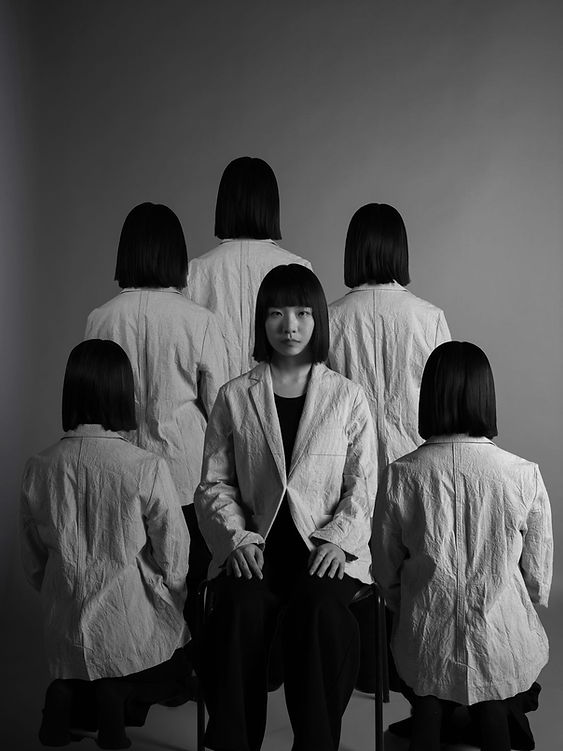
The Bright Side of the Moon
Drawing inspiration from Ludwig Wittgenstein’s theory of family resemblance, which posits that different entities may share interconnected similarities rather than one single defining feature, Family Portrait is a body of work that explores the complexities of subconsciousness. As the artist delves deeper into the concept of the self, she realises that the self is a composite of diverse characters, each possessing distinct needs and desires. Much like members of a family, these internal personas intricately intertwine, forming complex relationships. However, societal conventions often constraining the self to a singular entity denoted by the pronoun “I” and confined within the physical boundaries of the body. This work invites viewers to contemplate the profound layers of their own being and the hidden yet powerful subconsciousness.
JUDGE'S CHOICE
Benedetta
Donato
ANDRII BULAVKA Ukraine / France

Les cauchemars #4
The photo project Les cauchemars captures moments of solitude in my small Parisian apartment, where I find myself alone with my camera. The absence of the external world and onlookers allows me to feel anew, liberated from societal facades. In the process of creating this work, I suddenly discover that my body can be plastic, and the ordinariness of the things surrounding me - poetic, even dramatic. Each photograph bears witness to my experiment with my own personality and emotions within the confined space of intimate abode. By enclosing myself within the confines of a small apartment, I allow my inner demons to come to light.
LOUIS LITTLE United Kingdom

Self-portrait with Crunchy Nut Cornflake masks
The pictures were taken as part of my photographic exploration of how family, ritual and play interconnect with place. Taking inspiration from Johan Huizinga’s book ‘Homo Ludens’ – a study of play and how it has shaped society through history – these self-portraits are an attempt to transform everyday mundane rituals into playful moments. We all have an understanding of what a morning ritual might relate to. In ‘Self-portrait with Cornflake masks’ I attempt to flip this idea on its head by creating something outlandish, whilst handing over autonomy of the picture taking process to someone else. The masks were handmade with my son Otis out of latex and Crunchy Nut Cornflakes. After setting up the portrait, I described to Otis what It was I was hoping to achieve and handed the cable release over to him to take the photographs.
LIZ MILLER KOVACS USA/Germany

Longyearbyen Venus
My long-term, ongoing project, Supernatural, consists of self-captures in these altered landscapes. In the series, I ponder, "What will future cultures think of the scarred earth we leave behind?" In the photographs, I envision future archaeological discoveries and the possible mythologies that could emerge about us if ours becomes a lost civilisation. "Longyearbyen Venus" was photographed in the coal stockpiles on location under the midnight sun at 2:00 a.m. The wind was extreme, and the temperature was minus eight degrees Celsius. The harbour is active 24 hours a day, with truckloads of coal constantly being delivered from the nearby mine and piled up in the shipyard awaiting shipment to mainland Europe. The black coal extracted here is the highest quality and most efficient in the world. It is produced in the archipelago's last active mine. As Norway phases out coal production, Europe will soon have to depend on coal from overseas. Currently, the Norwegian government is developing the island as a luxury ecotourism destination.

Darvaza Pietà
A key aspect of my practice is capturing the sublime from a female perspective. I stage self-portraits in environments surrounding extraction industries, wrapped in self-designed fabric costumes, transforming my body into a female-coded object. "Darvaza Pietà" was staged and captured at the Darvaza Gas Crater (also known as the Gates of Hell) in the Karakum desert. I travelled hundreds of kilometres in a 4WD off-road with an assistant off the grid into the desert to reach this location, which has been burning for over 50 years, releasing carbon emissions. The site was drilled by Soviet engineers in 1971 as a natural gas well, but it collapsed, forcing the engineers to light the crater on fire to prevent poisonous gases from escaping. Scientists claim that the fire inside the crater will continue to burn for decades to come. The Pietà recalls historical images of the mourning Virgin Mary, its meaning derived from the Italian word for mercy and compassion

Lom Maledivy Odalisque
I capture my self-portraits surrounded by the striking visuals in my photos to inspire inquiry into the scope of extractivism. The high concentrations of minerals and the buildup of acidity from these industries create otherworldly visual forms and colours. "Lom Maledivy Odalisque" was captured in a former kaolin quarry near Nepomyšle, Czechia, known by locals as the 'Czech Maldives' due to its resemblance to a tropical island. Kaolin is a cosmetic ingredient and is safe for the skin. This site has become an unofficial recreational lake during the summer. Here, I combined elements of classical art and Surrealism to create an art historical reference from a modern perspective. The figure reclines as if bathing, recalling the objectification of the feminine in 19th-century European Orientalist art. For this reason, here I wrapped my body in a long piece of sheer fabric rather than using a constructed costume to reflect portrayals of the 'Odalisque' throughout art history.
YUXING CHEN China/UK

Outside of the Pavilion, Brighton
This image is a digitally manipulated vintage postcard of The Royal Pavilion, Brighton, juxtaposing historical representation with contemporary presence. The original postcard, with its bright colors and idealized depiction of the Pavilion, reflects a mid-20th-century tourist aesthetic that frames the building as an exotic landmark. The artist inserts herself into this staged scene, seamlessly blending into the composition yet subtly disrupting it. Holding an ice cream, she appears as both a participant and an observer, engaging with the constructed nostalgia of the postcard while questioning her own place within this imagined setting. This intervention highlights the Royal Pavilion’s role as a historical artifact shaped by Western fantasies of the East, while also inviting reflection on how cultural identity is perceived, performed, and situated within these mediated representations. This work is from artistic series, Two kinds of Imagination.
DAWN WOOLLEY United Kingdom

#REBEL Selfportrait 3
The #Rebel Self-portrait series are created in the #Rebel Selves installation wearing the costumes made for visitors to wear in their selfies. The project aims to queer the gender binary and other restrictive norms in self-portraiture. The self-portraits reference an advert for L’Oreal Infallible Sculpt makeup featuring Barbara Palvin wearing a belt of selfie-sticks and mobile phones photographing her from all angles. Palvin says ‘I may not be infallible, but I’m always selfie ready’ and a voiceover tells the audience that they can be ‘selfie ready from any angle, 24 hours a day’. My costume and installation do not place me in the centre of a disciplining gaze of cameras, but visually entangle me in the installation – a glitchy apparition that is hard to pin down.
ELENA BORODINA Russian Federation

Maze
In the photo, the self-portrait looks like a geometric matryoshka puzzle. The faces seemed to get stuck, lost in the maze of triangles. And among the eye-popping details, you have to look for faces, like in a puzzle.
KICCA TOMMASI Italy

Architecture of a Collapse
This image is part of a series of self portraits born from the need to learn how to inhabit what remains. The Palazzo Chigi Albani interests me as a wounded architectural body: a place that bears within itself the marks of time, transformations, and losses. A building in a state of waiting, a suspended organism that has lost its function but remains charged with memory. A body crossed by gestures, traces of life, absences, and overlapping layers. It is neither a ruin nor a refuge, but a threshold — a liminal space where the past and possibility coexist.
YAMAMOTOHISAYO Japan

Shopping
This work, "Shopping" is one piece from the self-portrait series "Like a woman" by the artist Yamamotohisayo, in which she expresses her discomfort with "femininity." This self-portrait series shows her discomfort with traditional ideas of "femininity." In this series, she takes photos of herself doing household chores while wearing masks she made. These masks are made from items related to food (symbolising women's role in nurturing) and fashion or beauty products linked to social and cultural ideas of femininity. The masks look like ancient Jomon clay figures (dogu) and folk masks. This reflects her belief that these ideas of femininity have been imposed on women for centuries.
By hiding her face with these masks and showing herself doing chores often seen as women's work, like cleaning, cooking, and laundry, she shows how these expectations are an unnatural burden for herself and many other women.
"Managing the home has traditionally been considered women's work. Daily necessities for the family to live must be replenished. Rather than thinking about what I want or need for myself, I must constantly consider the care of others; otherwise, the entire family's life would fall apart. It is a profession that demands perfection."
NATALIA EREZ Israel

Blocks
This self-portrait describes the experience of living within invisible boundaries in a modern digital life. People are excited to have such impressive developed technology but they don't pay attention that with all this progress they lose the ability for deep reflections, analysis, establishing causes and consequences, searching for proves of given information and so on. People prefer to replace all this with unverified but quick information that they get from the digital world. This distortion may lead to self-development limitations and eventually losing ourselves.
GABY SILVA USA

Good Girls Don't Wear Cheetah
My cultural upbringing has molded me into the person I am today whether I like to acknowledge it or not. I’ve struggled to create an identity and purpose distinct from what my family intended. At times, I feel like I’m stuck in a limbo between the two parts of myself. Traditional Brazilian social values often push the idea of machismo which have often left me feeling objectified or an ornament. Being a woman means to perform in almost every aspect of your life. At times, I find myself acting behind closed doors. The expectations placed on me to fit into a role drove me further away from my own sense of self, leading me to feel alienated from my own femininity.
JUDGE'S CHOICE
Louise
Fedotov-Clements
MONÍK MOLINET Cuba / Mexico

Journey To Thrihnukagigur Volcano
At the end of 2024, I traveled into the inactive Thrihnukagigur volcano in Iceland with a 35 mm camera and a roll of Ilford HP5. The vastness of the space, the density of the geology, and a mineral, almost amphibious light that clings to the rock marked a confrontation with the immense and the untamable. I was overwhelmed by the experience of the sublime: a point where perception overflows and the senses can no longer keep up. In that excess, finitude is revealed, along with the awareness of a reason striving to grasp the immeasurable. Months later, while digitizing negatives in Mexico, another roll of Ilford HP5 appeared: self-portraits taken in states of anxiety and paralysis, fragments of a body suspended in vulnerability.
I discovered a thread linking the two series: distinct landscapes sharing the same emotional geography. The geology of the world becomes an amplifier of an inner geology: fissures, folds, and eruptions connecting the mineral with the subjective. Through collage, I establish an axis between the sublime and the intimate. The volcano is not a “background,” but an embodied experience: temperature, roughness, void, acoustics, latency. The self-portraits absorb this phenomenology: breath, weight, gravity, fall, support. Matter and emotion vibrate in the same frequency; the intimate gains density within the vast. I cut and stitched the photographs, respecting each frame’s truth, as an honest, precise act, a wound, a fissure revealed as it is.
MÉLODIE ROULAUD Mélo France / UK
%20-%2028%20-%20Chapter%203-%20Becoming%20Flesh-%20%20Inviti.jpg)
Chapter 3, Becoming Flesh, Inviting Chaos #08
This image is from "Becoming Flesh," a personal photographic series and installation exploring my complex relationship with my body. The work examines the gap between how bodies are seen and regulated from the outside, and the hidden experience of inhabiting them from within. This project has a therapeutic intention: to dismantle cultural processes that have alienated me from my body by inventing creative modes of bodily expression beyond established norms. The series unfolds through four chapters, and this image belongs to Chapter 3, “Inviting Chaos”. In this chapter, I seek to invent new ways of representing my body, assembling my fragments outside the aesthetic and cultural frameworks that have been offered to me throughout my life.
Using the traditional form of the still life, I recompose body fragments according to my own poetic logic. I integrate organic materials (fruits, vegetables, cheeses, stones) and other objects as symbolic substitutes, reminding that the body exceeds its visible materiality - that it possesses an imaginary, energetic, metaphysical dimension that cannot be captured through surface appearance alone. This work becomes a space of resistance and a way of reclaiming bodily agency through creative expression.
JUDGE'S CHOICE
Eiffel
Chong
DARIA NAZAROVA Russia / Georgia

Embrace the Void
My work explores the loss of home through physical displacement and the emotional weight of personal belongings. Raised in a family of artists, I was surrounded by objects full of memories. For many years, moving was a conscious choice - a search for myself and new opportunities for growth in a space that was becoming increasingly restrictive. With each transition, I lose parts of my past and discover new versions of myself. I reflect on this through my body—the only constant refuge—and the things that live with me for a time. Photography allows me to weave them into scenes made of memory fragments, holding on to what slips away, as if to remind myself that to possess is nothing more than to embrace the void.
ISABELLA MATTIO Bellatudela USA

Self Love
A visual dissection of modern identity. In a world obsessed with aesthetics, this challenges what it means to be both the consumer and the consumed. It blurs the boundary between beauty, capitalism, and self-worth — confronting how easily the human form becomes a product.
SOPHIE COOL France

Pasta Self-Portrait
Self-portrait from the Edible Portrait series — a visual exploration in which the human body gradually fades away, replaced by food. This symbolic disappearance questions our relationship to identity, the materiality of the body, and a consumerist society where the individual tends to merge with what they consume.
HEATHER AGYEPONG UK

The world is lost through silence.
From Sunrise to Sunset, She Worked to Reform Herself.
This work draws from Colston Whitehead's Pulitzer Prize winning novel The Nickel Boys and RaMell Ross’s 2024 film adaptation, which tells the story of Elwood Curtis, a boy whose belief in discipline and hard work cannot save him from the violence of an unjust system.
His story mirrors the damaging effects of grind culture, which I have deeply internalized over the past couple of years. Influenced by Tricia Hersey’s Rest Is Resistance, this project reclaims rest as a radical and sacred act. After an ADHD burnout diagnosis, I began to explore how productivity masked my exhaustion and how rest could become a form of mental, physical and emotional integration. Through the figure of the bride, I imagine being betrothed to myself: a commitment to tenderness, slowness, and the belief that worth is not earned but inherent.
CHIARA DONDI Italy

Fuori siete tanti, dentro sono anche più numerosa.
I wondered how many times throughout life we have to change and adapt and if what we have lost is really lost or if we keep it together with all the other parts of us. This little series is part of a broader research which for some years has led me to analyze my mental health and its changes. These last 10 years have been full of events that have changed the balance of my life, leading me to change once, twice, many times. I began to believe that we are not a unity, but rather a collection of parts that respond differently to different strains, experiences and people.
D M TERBLANCHE South Africa

Inside Outside The Box
Photographed in Germany, as part of a series of self-portraits exploring the internal life of living with late-diagnosed autism.
ALIONA KUZNETSOVA Ukraine / USA
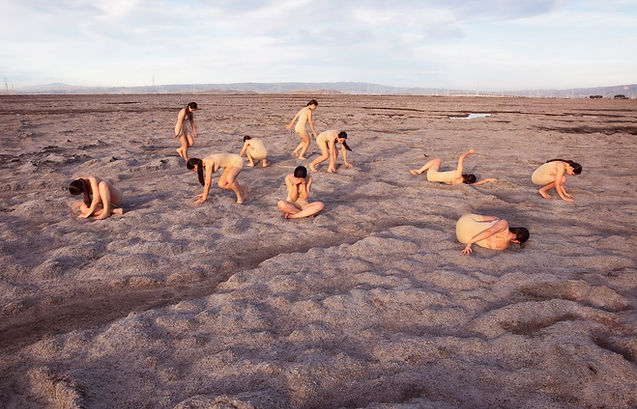
Grief 1
They say that grief has 5 stages. Denial, anger, bargaining, depression and acceptance. I would add shock as well. I woke up the morning of Feb 24th, 2022, to learn that my husband didn't sleep that night because he was coordinating our family through the first bombings and shootings on the streets of Kyiv. It was the first shock of many that first months. Other shocks - rape and torture of civilians, the bombing of schools and hospitals, Mariupol... Hate is a scary feeling for an artist, but I would hiss through my teeth - "let's donate for bullets for them".
Bargaining...mostly people call it activism. I taught courses in Photoshop to my photography group so that could find some work, made fun courses and exhibitions for relocated teenagers, made many photoshoots for donation, and organized Ukrainian evening in our gallery. Most of all - told and told and told real stories of real people I know personally - their way through this madness.
Last September, after I organized the exhibition of Ukrainian Women Photographers in Silicon Valley, I burned out completely. I couldn't work, couldn't post, couldn't talk to people. As a grey shadow, I was shooting still life in my apartments, and they gradually nursed me back to life. These days, war from the Ukrainian side is work, and our role in the diaspora is the role of donors. Those who still help found a way to not burn out, to manage the pain and know when to give and when to recharge. We hope we will not be alone, but we are ready to stand in any case.
KEVIN KUNSTADT USA
%20eyes%20on%20me%20-%20after%20Berenice%20Abbott%20-%208d9fa0ae-29dd-4b99-.jpg)
All (my) Eyes on Me - After Berenice Abbott
Image from "Pictures from Home."
ELAHE DEHGHANI Iran

The Cleansing of the Secret
"In this solitary meadow, she shares her secrets with the earth. Not to be heard, but to be lightened. Her hands cautiously wash the dark stain on the stone; as if she is cleansing the burden of the past and unveiling a buried truth. In this deep silence, she and the stone are the only witnesses to this meditation."
From project Sediment
Psychic wounds don’t disappear — they merely settle into the layers of time. The past, present, and future are not separate; they are extensions of a persistent pain, roots woven into the very fabric of identity. These wounds sink into our depths and continue to manifest through our behaviors, choices, and silences. At a certain point in my life, it felt as though my connection to the self had fractured. A longing to vanish, to withdraw from the world, and to escape the gaze of the Other took shape within me — an urge to fade from the edges of perception. This rupture marked the beginning of a process in which nature became not a refuge, but a field of confrontation — a space to face the hidden self. A confrontation with an inner fragmentation, and a search for the self buried beneath roles, expectations, and silence.
These images are narratives of lived trauma — a journey through the unseen layers of existence, where faded memories, and the traces of an unforgettable past are brought to life once again
OKSANA ZHILA Finland

Self-Portrait
Self-portrait. Every time I take a self-portrait, I ask myself the same question: Can I show my true self? Each time, it's a struggle between the desire to be seen and the fear of revealing myself completely.
VERÓNICA ETTEDGUI Venezuela

My Diaspora
Self-portrait covered with Hello my name is stickers with names of my loved ones who had left the country.
IMOLA HITRE Hungary

Censored Portrait
Our self-perception can depend a lot on our body image, the norms set by others and ourselves. As a woman, this perception is compoundedly difficult, the female body and therefore the female self-image is a constant topic and subject of criticism. To what extent does our body define our own being? Do the criticisms and taboos surrounding our body belong to our personality and self-image?
TATIANA CARDELLICCHIO Italy

La dictature des pétales #3
In this image, the rendering of color is a sweet and cruel deception: the flowers, vibrant in their artificial blue, dominate the bowed face, almost replacing it. The body yields, bends to the table, while the flower takes its place as a visible identity. The Dictatorship of the Petals reveals itself here as an aesthetic that invades and colonizes: beauty is no longer an ornament, but a forced mask, obscuring the skin to reveal itself in its place. And yet, in the folded shadow of the gesture, a silent tension survives: a desire to remain body and not image, presence and not appearance.
ALENA SOLOMONOVA Russia / Slovenia
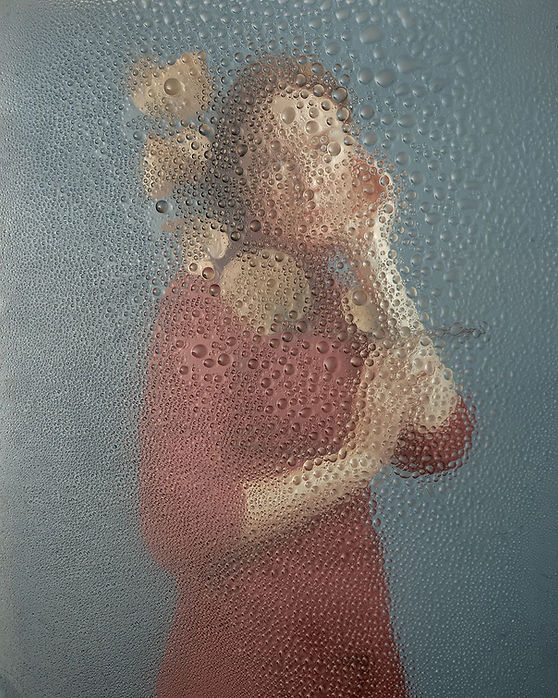
Wilting 1
The project explores the theme of withering and the desire to preserve youth. Dried flowers and plants in each photo symbolize the natural process of withering, they reflect not only physical but also emotional aging, the accumulation of experience and internal transformation. The blurred surface, covered with different substances, serves as a metaphor for modern attempts to hide the traces of time.
CHARLI BAKER United Kingdom

Dysmorphia
This image visualises the fracture, the struggle to trust what I see, or even to see myself at all. The body becomes both hyper-visible and completely unknowable. “Dysmorphia” is a confrontation with an internal distortion that can become all-consuming and is part of a larger series called 'Chariot' As a child of the 90's, and mother to a four year old daughter, the series begins with my own body - how it has been judged, reshaped, and spoken of for as long as I can remember. I was eight when I was put on my first diet by a school nurse. At sixteen, I weighed sixteen stone. Since then, the body I live in has been treated as a problem to fix, to silence, to shrink. Through symbolic self-portraiture and still-life images, I aim to visualise the feeling itself, to invite the viewer to sit with discomfort and to question the stories we inherit.